About Carbon Monoxide (CO) Alarms

A CO alarm is the only way to detect carbon monoxide. You cannot smell it, see it or taste it, which means without an alarm, you have no warning at all.

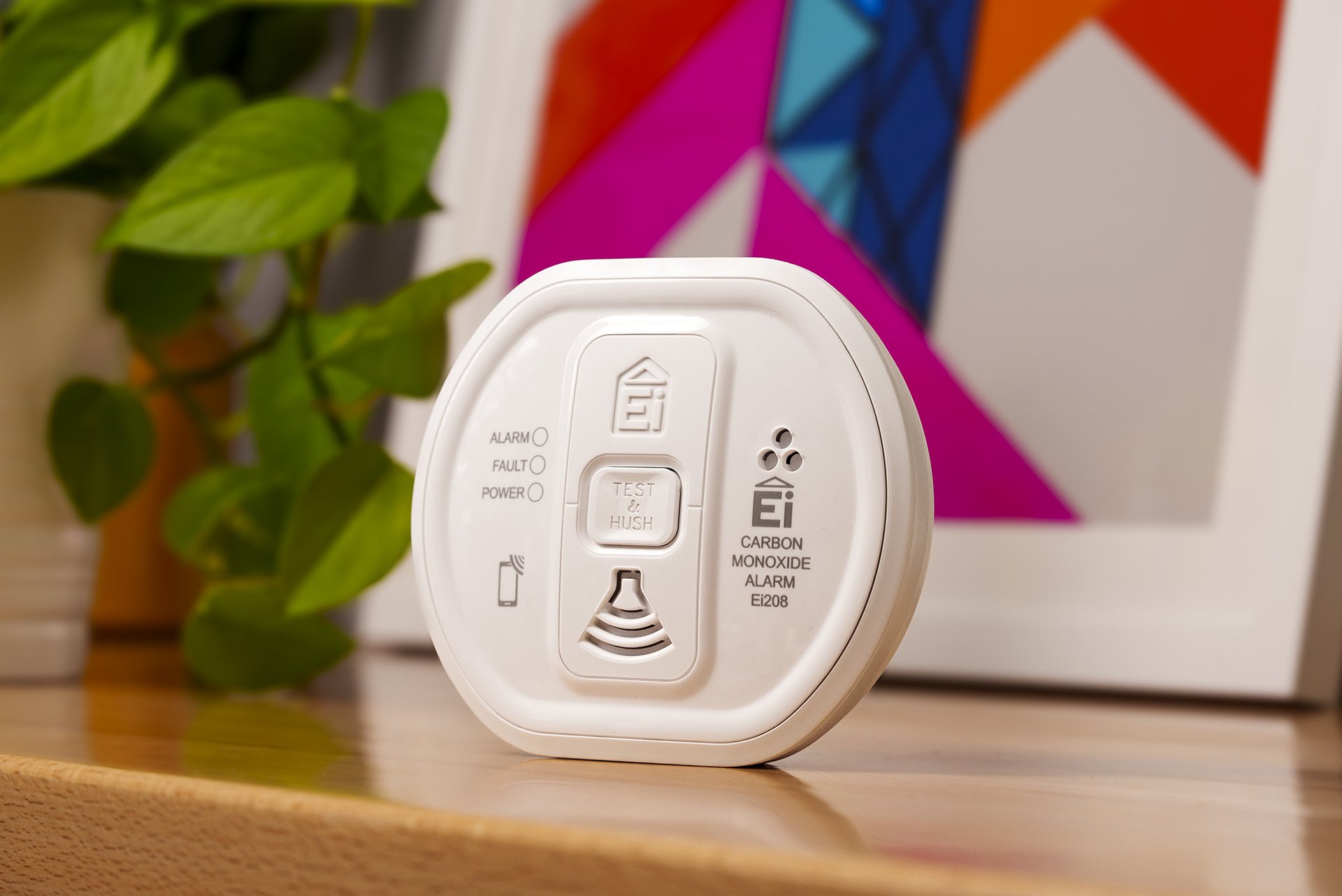
A carbon monoxide detector resting on a wooden surface with a blurred colorful abstract art background and green plant leaves on the left side.

What is a CO Alarm?

A carbon monoxide alarm continuously monitors the air in a room for CO gas. When levels reach a dangerous concentration, it triggers an audible alert, giving you and anyone in the property the chance to get out safely.

Unlike smoke alarms, which react to something you can already see and smell, a CO alarm is your only line of defence against a threat that is completely invisible to human senses. That's what makes it safety-critical, not just a useful precaution.

Understanding BS EN 50291: what the certification means

When buying a CO alarm, the most important thing to check is certification. Any alarm sold in the UK should comply with BS EN 50291, the British and European standard for CO detection devices.

There are two parts to the standard:

BS EN 50291-1 covers alarms for domestic use, the type fitted in homes, rental properties and fixed residential settings.

BS EN 50291-2 covers alarms designed for use in caravans, motorhomes, boats and leisure vehicles. If you're planning to use an alarm in a caravan or on a boat, make sure it carries this certification specifically.

For travel abroad, both standards are recognised across Europe, so an alarm certified to BS EN 50291 in the UK is suitable for use in European holiday accommodation. Always look for the BSI Kitemark as a mark of independent testing and approval.

Avoid any alarm that does not carry this certification. Uncertified alarms may not detect CO accurately, may trigger false alarms, or may fail to sound when it matters most.

What to Look for When Buying a
CO Alarm

A carbon monoxide sensor with labels indicating it detects carbon monoxide. It is placed on a wooden surface with green plants in the background.

Aico CO alarms: certified, tested, trusted

A carbon monoxide alarm device placed on a wooden table with a house logo and various control buttons. A green leafy plant is on the side, and a colorful geometric artwork is in the background.

Ei Electronics/AICO products are tested and approved according to stringent European Norm test standards. The sensors, which form the heart of their products, are individually calibrated in real gas or smoke. Each product is subjected to a comprehensive list of tests before leaving the factory and can be traced back to its starting point in the manufacturing process. Their goal is to produce the most reliable early warning devices of their kind.

For more information visit www.aico.co.uk

A black and white logo which is the BSI Kitemark

Which carbon monoxide alarm is right for me?

Ei208WRF RadioLINK+ Battery CO Alarm for wireless interconnected systems

The Ei208WRF is battery powered with a sealed 10-year lithium cell, removing the need for mains wiring. It includes RadioLINK+ wireless interconnection, meaning it can be linked with other Aico alarms throughout a property so that if one alarm triggers, all alarms sound. Also includes AudioLINK+ data extraction. Certified to BS EN 50291-1:2018 and BS EN 50291-2:2019.

Best for: rental properties, caravans, motorhomes and situations where wired installation isn't practical.

Ei3018 Carbon Monoxide Alarm
for permanent home installation

The Ei3018 is a mains-powered alarm with a 10-year rechargeable lithium backup, so it continues to protect even during a power cut. It fits on Aico's easi-fit base for straightforward installation and includes AudioLINK+ technology, which allows real-time data to be extracted from the alarm via a smartphone app. Compatible with Aico's SmartLINK system for remote monitoring. Certified to BS EN 50291-1:2018.

Best for: homeowners, landlords and fixed residential properties.

Ei208 Battery CO Alarm
standalone battery alarm

The Ei208 is a compact, standalone battery alarm powered by a sealed 10-year lithium cell. It requires no wiring and no interconnection setup, and can be wall mounted or placed free-standing, making it the most straightforward option to deploy quickly. It includes AudioLINK+ for data extraction and weighs just 180g. Certified to BS EN 50291-1:2018 and BS EN 50291-2:2019.

Best for: straightforward home protection, rental properties and anyone who wants a simple, reliable alarm without installation complexity.

Carbon Monoxide detector on a wooden surface with a fireplace burning in the background.

WHERE TO INSTALL Co ALARMS
at home

CO alarms should be fitted in every room that contains a fuel-burning appliance, and in any room through which a flue passes.

For ceiling-mounted alarms: position at least 300mm from any wall, and between 1 and 3 metres horizontally from the potential CO source.

For wall-mounted alarms: position at least 150mm from the ceiling and above the height of any door or window.

Alarms should also be placed in or near bedrooms, as CO poisoning risk is highest when you're asleep and unable to notice early symptoms.

Always follow the manufacturer's installation guidance for the specific product you're using.

Knowing you should have a CO alarm is one thing. In many cases, it's also a legal requirement.

The rules vary depending on where you live and whether you own or rent your property.

England: Landlords are legally required to fit a CO alarm in any room containing a fixed combustion appliance, excluding gas cookers. This applies to all rented homes under the Smoke and Carbon Monoxide Alarm (Amendment) Regulations 2022. Landlords who fail to comply face a penalty of up to £5,000.Read the full regulations on GOV.UK.

Scotland: The requirement goes further. All homes in Scotland, not just rented properties, must have a CO alarm where any carbon-fuelled appliance is present, excluding appliances used solely for cooking. Read the Scottish Government guidance.

Wales: Landlords must fit CO alarms in rented properties where any gas, oil-fired or solid fuel burning appliance is present. Read the Welsh Government guidance.

If you're a tenant and unsure of your rights, Citizens Advice has guidance on what your landlord is required to provide.

If you own your home, there is currently no legal requirement in England or Wales to fit a CO alarm, but the risk is the same regardless of tenure. Every home with a fuel-burning appliance should have one.

The law on CO alarms in the UK

Most people fit a CO alarm at home and stop there. But the risk doesn't stop when you leave.

Holiday accommodation, including villas, apartments, Airbnbs and hotel rooms abroad, often contains gas appliances with no guarantee of recent servicing or local alarm requirements. In many countries, CO alarm regulations either don't exist or aren't enforced in the same way as in the UK.

Taking a portable CO alarm when you travel is a simple, low-cost step that could save your life. A compact, free-standing alarm takes up minimal space in hand luggage and requires no installation.

CO alarms and holiday accommodation

Modern kitchen with white marble island, black and wood cabinets, four golden pendant lights, large windows, and outdoor greenery.